When you're introducing something new, most founders and product marketers zero in on their ICP and the buying committee. It's an intuitive approach, yet incomplete.
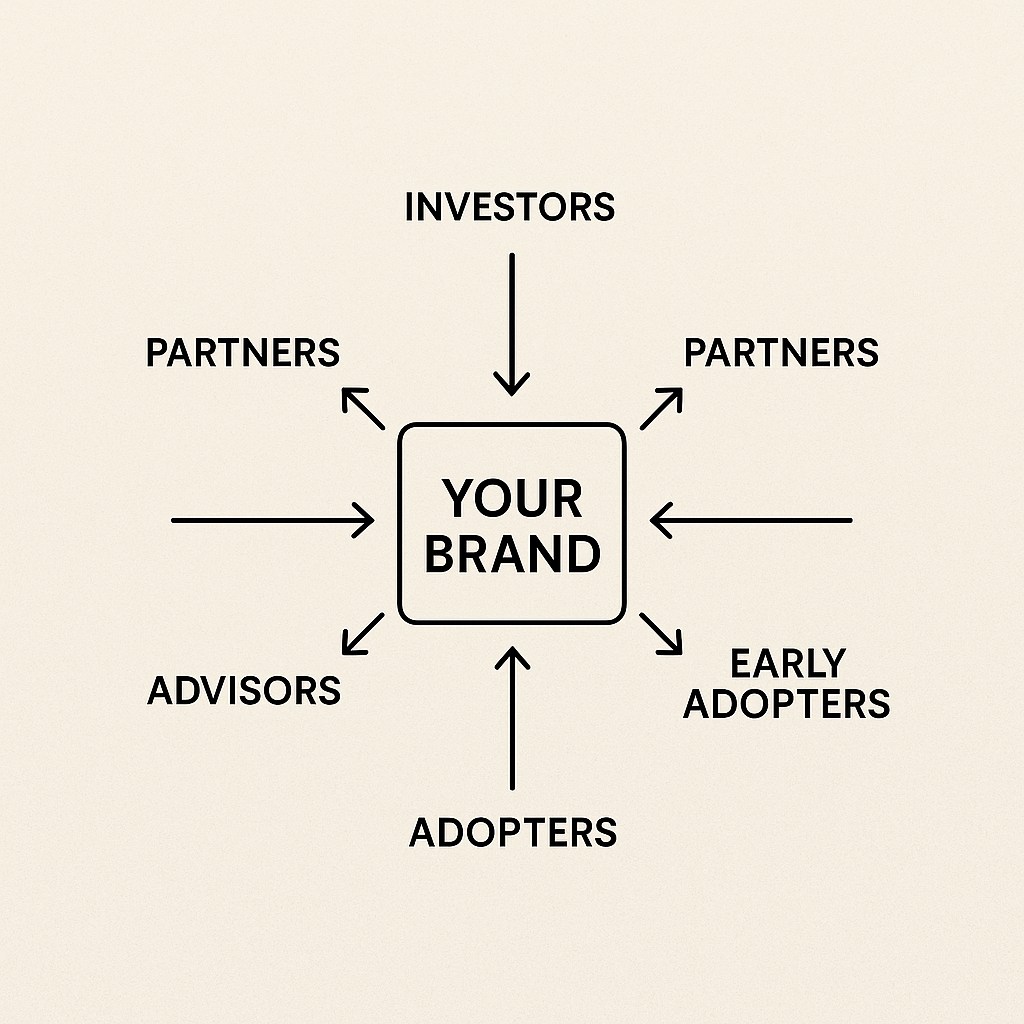
That's because every product lives inside an ecosystem of influence: a network of partners, analysts, investors, early adopters, laggards, advisors and even competitors who shape how your story travels, long before you're in the room.
Some of them are champions.
Some are neutral.
Some can become unintentional blockers.
Ignoring them means your message reaches the market unprepared — interpreted, reframed or diluted by people you never targeted.
The biggest mistake in early positioning:
crafting a story for the buyer only.
Your Market Is an Ecosystem, Not a Funnel
When you introduce something new, influence moves laterally, through conversations, comparisons, whispers and back-door opinions exchanged inside the broader network.
Ecosystem positioning acknowledges those dynamics and intentionally shapes how every stakeholder understands your value. That work is inseparable from how you define the category itself — a tension explored in Category Creation: The Good, the Bad & What Really Drives It.
Instead of pitching your product at the market, recruit the players who make up the market.
What Each Stakeholder Needs to Hear
Ecosystem positioning means clarifying your value to every actor in the system — each with their own backgrounds, incentives, risks and mental models.
- Early Adopters: show how adopting early increases their influence, credibility and ability to shape the future narrative of the category.
- Partners: demonstrate how aligning with you expands their deal size, differentiates their offering or opens new channel opportunities.
- Analysts & Advisors: make visible the unmet problem you're solving — the one clients keep surfacing — and show how naming this gap helps them guide others.
- Competitors: illustrate how your presence expands the category, legitimizes new demand or raises the urgency of innovation across the space.
- Laggards & Later Adopters: provide signals that the market is de-risking — show traction, early wins, validated use cases and clear paths to adoption.
The goal isn't to make every group an advocate.
It's to ensure none of them become a blocker.
When the Ecosystem Understands Your Value, Momentum Compounds
When people across the system understand what you're doing, and why it matters to them, a strategic tailwind begins to form.
A partner reinforces your narrative inside their own conversations.
An analyst validates your direction without being prompted.
A competitor reframes the market in a way that actually helps you.
An investor repeats your positioning to their portfolio.
Early adopters become the signal others look for.
None of this happens through force. It happens through clarity.
And once this alignment takes shape, three things accelerate simultaneously:
- Buyers hear your story well before you reach them
- Deals move faster because friction disappears earlier
- Trust forms upstream, not downstream
What began as a "new product" becomes a shared opportunity — a narrative multiple players benefit from reinforcing.
The Power of Ecosystem Positioning
Ecosystem positioning isn't about creating hype.
It's about establishing contextual value to generate broader alignment.
It transforms your value from something you announce
into something the market begins to echo, with or without you.
And in environments where noise is high and attention is fragmented, alignment is one of the most durable growth advantages you can build.
At Stratespheric, we help companies move beyond transactional partner strategies — building ecosystems positioned around shared conviction rather than short-term conversion.
Key Takeaways
- Positioning that speaks only to your ICP leaves half your leverage untapped — influence moves laterally through ecosystems, not just funnels.
- Every stakeholder — partners, analysts, competitors, laggards — needs their own value narrative or they become unintentional blockers.
- The goal isn't to make every group an advocate. It's to ensure none of them become a blocker.
- When the ecosystem understands your value, buyers hear your story before you reach them, deals accelerate and trust forms upstream.
- Ecosystem positioning transforms your value from something you announce into something the market begins to echo.