The defining healthcare trend of the moment isn't AI.
It's that consumers are increasingly starting their healthcare journey before they ever see a doctor.
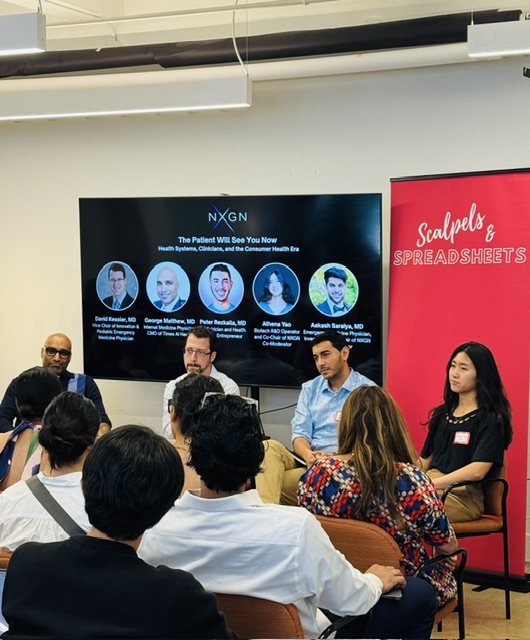
That shift was the focus of a New York Tech Week 2026 session, The Patient Will See You Now: Health Systems, Clinicians & the Consumer Health Era, featuring practitioners from NYU Langone, MedStar, NewYork-Presbyterian, Columbia and other institutions.
The conversation revealed something larger than a technology trend. Healthcare is being forced to adapt to a world where information is abundant, patients are increasingly self-directed, and trust is no longer automatically granted to institutions.
The Healthcare Journey Now Starts Earlier
Patients increasingly arrive at the doctor's office or ER with ChatGPT diagnoses, wearable data, lab panels, GLP-1 protocols and treatment preferences already in hand.
According to Dr. David Kessler, AI-generated health concerns are contributing to an estimated 15% increase in patient visits. The result is predictable:
- More anxiety
- More misinformation
- More unnecessary visits
But that's only part of the story.
The Rise of the Participatory Patient
Dr. Peter Rezkalla noted that these interactions are also creating opportunities for deeper engagement, particularly among younger patients.
Instead of seeing a physician once a year and passively receiving guidance, patients are arriving with questions, data and curiosity. The visit becomes less transactional and more relational. In many cases, patients are engaging with clinicians more actively than ever before.
Part of this shift traces back to the pandemic, when consumers faced unprecedented health challenges, information was incomplete, and even the experts lacked clear answers. Trust in traditional healthcare pathways weakened, and consumers began seeking guidance elsewhere just as access to AI, wearables and direct-to-consumer health tools expanded.
The result is a fundamentally different relationship with healthcare.
"Suddenly the human has become a second opinion." — Dr. Peter Rezkalla
Information Is Abundant. Interpretation Is Scarce.
Several physicians on the panel observed that healthcare was built for a world in which institutions controlled information. That world no longer exists. Today, information is everywhere:
- Medical studies
- AI-generated recommendations
- Wearable data
- Lab results
- Online communities
- Personalized treatment protocols
The bottleneck has shifted from information access to information interpretation.
Patients are increasingly deciding which sources, studies and recommendations deserve their trust. That's driving a big change in the role healthcare organizations play.
From Front Door to Every Door
For years, health systems focused heavily on owning the patient relationship through a single entry point:
- Physician referral
- Primary care visit
- Hospital system
- Patient portal
But consumers no longer follow linear journeys. They could begin with:
A wearable alert.
A chatbot conversation.
A lab result.
A social media post.
A search query.
Or a physician visit.
Beyond the tech and workflow innovations already underway, healthcare is moving towards an omnichannel experience that meets patients wherever their journey begins.
The organizations positioned for success won't just reclaim the front door. They'll guide patients through every door.
The New Healthcare Advantage
Zooming out, healthcare is becoming a navigation business.
Information is abundant. Patients have more tools, more data and more choices than ever before. What remains scarce is clarity.
Trust is increasingly earned by helping people make sense of a complex ecosystem and move confidently through it.
The organizations that succeed will help patients navigate decisions, not simply deliver diagnoses. Because the future of healthcare belongs to those who can guide people through uncertainty.
At Stratespheric, we work with healthtech and health services companies navigating this shift — helping them build the commercial infrastructure that earns trust in a navigation-first landscape.
Key Takeaways
- Consumers are increasingly beginning their healthcare journey before seeing a physician.
- AI, wearables and direct-to-consumer health tools are accelerating self-directed healthcare behavior.
- Information abundance is shifting the challenge from access to interpretation.
- Patient journeys are becoming omnichannel rather than provider-centric.
- Healthcare organizations are evolving from authoritative institutions to trusted navigators.